
Starlink's next move
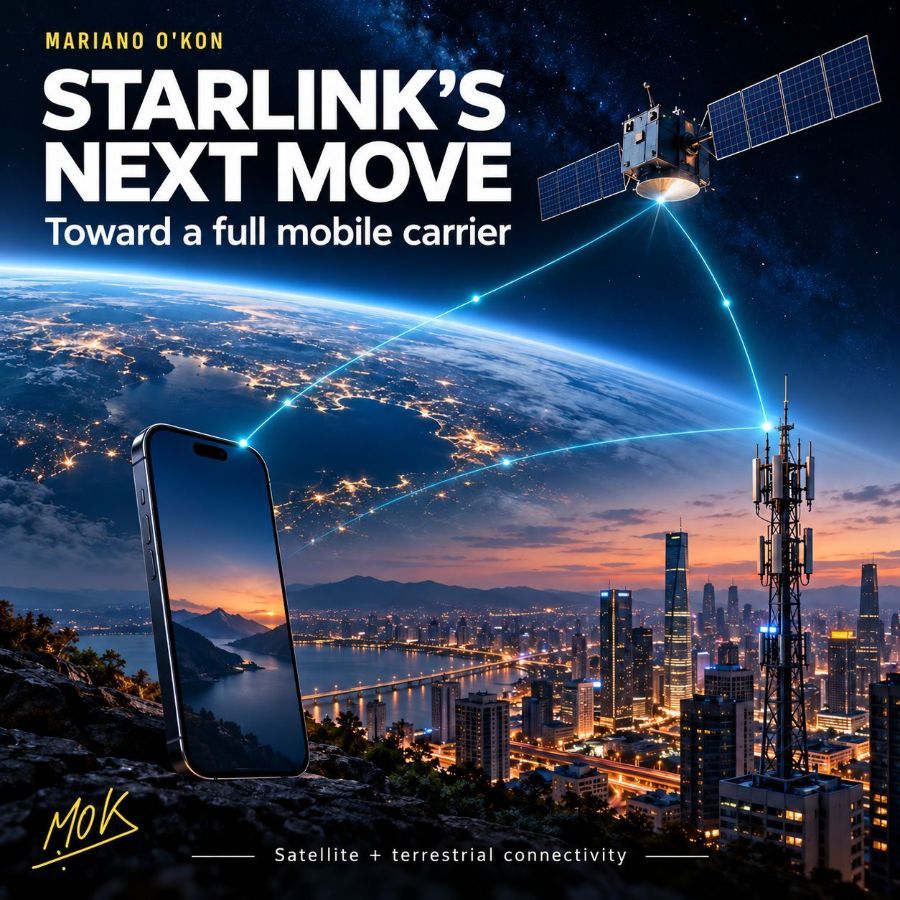
Mobile carrier strategy is outside my core area of expertise, but I believe Starlinks latest announcement could have significant implications for connectivity and competition.
I’d welcome feedback from the telecom, wireless, and satellite experts in my community: what am I getting right, and what might I be missing?
Starlink is making its move toward becoming a full mobile carrier, and a key development is happening on the ground.
SpaceX announced an agreement to acquire nationwide 800 MHz spectrum, alongside FCC approval for a 15,000-satellite Starlink Mobile Gen2 constellation.
The planned network combines satellite connectivity with terrestrial infrastructure.
SpaceX says the new low-band spectrum will help signals reach inside buildings, complementing its 2 GHz spectrum for capacity.
The spectrum acquisition still requires final FCC approval.
My take: this moves Starlink’s ambition beyond filling coverage gaps. It points toward competing for the everyday mobile customer.
That could change the equation for established carriers.
A satellite partner can also become a competitor, and coverage expectations could rise across the industry.
Execution will decide the outcome: reliable indoor service, capacity in crowded areas, compatible devices, pricing, and customer support.
For those working in this space: how significant is this move, and what are the biggest hurdles between the announcement and a competitive mobile service?
Source: SpaceX, BUILDING THE WORLD’S MOST ADVANCED MOBILE NETWORK, October 8th, 2026: lnkd.in/eWDmTAQZ

Mariano O'Kon speaks and advises on AI, cybersecurity, networking, infrastructure and the business impact of technology. Full bio