
Digital transformation: SASE
Digital transformation describes the impact of technology on business strategy. Technology can enable, differentiate, or even define business strategy. Over the last 15 years, key technologies associated with digital transformation have included cloud, mobile, big data, and, more recently, artificial intelligence (AI).
What Was the Biggest Driver of Change?
The primary technological innovation that profoundly changed the way we work is the smartphone. The introduction of the iPhone in 2007, followed by Android devices, enabled by 3G, 4G, and later 5G mobile technologies, allowed users, at scale, to access data and applications from anywhere, at any time—literally.
What Was Enterprise Architecture Like before?
Until the end of the first decade of this millennium, enterprise architecture was data center-centric. Business applications resided in enterprise-owned data centers. Large companies had multiple data centers for redundancy, reliability, disaster recovery, or scalability.
At that time, accessing business applications from outside the internal network was nearly nonexistent. Data traffic patterns were simple: 80% of traffic remained internal, while the remaining 20% consisted of external communications such as email, YouTube, or Facebook. If an employee in a branch office accessed business applications, the traffic followed a predictable path: from the branch to the data center and back.
Given this setup, WAN design was straightforward and static. Private links connected branches to the data center, and organizations with sufficient budgets could deploy multiple private links for redundancy. Internet access for the entire company was centralized at a single location. Security was equally simple—install the biggest firewall possible at the enterprise "edge" where private and public networks converged.
This architecture made internal network breaches a significant concern. In December 2013, a major U.S. retailer suffered a historic breach compromising the personal and credit card information of over 40 million customers, reshaping cybersecurity priorities. This breach started from within their network.
During this era, IT administrators had a relatively "easy" job:
- All applications resided in their data center, which they owned and maintained.
- They installed and managed the software stack.
- They knew where their users were—at their desks, using company-owned and maintained computers.
- Traffic moved through networks they owned and operated.
They had everything under control—until everything changed.
The Shift: Applications Moved First
By the early 2010s, demand grew for anytime, anywhere access to data and applications. The growth of smart phones and the launch of the Apple iPad reinforced this shift. Initially, enterprise IT departments resisted the idea of allowing personal devices on corporate networks. However, Bring-Your-Own-Device (BYOD) quickly became an accepted concept, expanding to tablets, phones, and laptops not issued by the company.
Businesses began using applications hosted on the internet instead of their own data centers to support this new paradigm of user demanding access from anywhere, any time.
Welcome to SaaS!
Software-as-a-Service (SaaS) emerged in the 2000s, and by the mid-2010s, organizations were consuming thousands of SaaS applications. Notable SaaS platforms include:
- Google Apps (2006)
- Microsoft Office Live (2010)
- Webex (1996, acquired by Cisco in 2007)
- Salesforce (2000, pioneering cloud-based CRM)
- Dropbox (2008)
Welcome to IaaS!
Infrastructure-as-a-Service (IaaS) was pioneered by Amazon Web Services (AWS) in 2006, offering cloud computing services such as Amazon S3 and EC2. Cloud computing provides on-demand computing resources with a pay-as-you-go model, eliminating the need for businesses to maintain physical infrastructure.
Where Is My Application?
Organizations now consume software from multiple sources:
- SaaS: No installation, maintenance, or upgrades—just configure and use.
- Public Cloud: Businesses develop, install, and maintain applications, while cloud providers handle infrastructure.
- Private Cloud/Data Centers: Organizations manage everything from hardware to software.
With most companies following a hybrid approach, using SaaS, multiple Public Clouds, and Private Clouds, network engineers can no longer predict where an application resides.
Then, People Moved Too
By 2019, technology enabled remote work, but office culture remained dominant—95% of employees still worked in offices Monday through Friday, 9 AM to 5 PM. Then COVID-19 happened.
The pandemic forced remote work adoption at scale. Once businesses saw that productivity and profitability remained intact, attitudes changed. Post-pandemic, many companies are pushing for employees to return to the office, but employees are pushing back. The future remains uncertain.
One undeniable truth remains: IT administrators no longer know where users are accessing applications from. Welcome to Hybrid Work.
A New Era: Hybrid Cloud + Hybrid Work
With Hybrid Cloud (applications residing in multiple locations) and Hybrid Work (users accessing apps from anywhere), enterprises need a new framework and architecture. Today, 80% of enterprise traffic is directed outside the company network.
- Employees share files with colleagues, partners, and customers from home using cloud resources.
- Applications are no longer monolithic; they are a mesh of interconnected services, communicating via APIs.
- Cybersecurity concerns have evolved—how do you secure API communications? How do you enforce business policies dynamically based on user location, time of access, and risk levels?
The Evolution of Networking: SD-WAN, SSE, and SASE
By the mid-2010s, vendors introduced the support of multiple WAN links and intelligent traffic management. This allowed organizations to use more reliable, and expensive, MPLS like, together with broadband internet access, together with VPN connections, in each branch. This allowed organizations to send traffic, following business policies, to either link intelligently. This reduced costs and added flexibility.
Then vendors introduced Direct Internet Access (DIA)— allowing branch offices to route internet-bound traffic directly instead of backhauling it through a central data center. This, in turn, created a new set of security requirements.
SD-WAN: Smarter Traffic Management
Between 2013-2014, Software-Defined Wide Area Networking (SD-WAN) emerged, leveraging software-based control for dynamic traffic optimization over multiple connection types (MPLS, broadband, LTE, 5G).
Cloud Security: Protecting Distributed Access
As branches connected directly to the internet, cloud security services became critical. These services included Secure Web Gateway (SWG), Zero Trust Network Access (ZTNA), Cloud Access Security Broker (CASB), Firewall as a Service (FWaaS), Data Loss Prevention (DLP), DNS Security, and more.
SASE: The Unified Approach
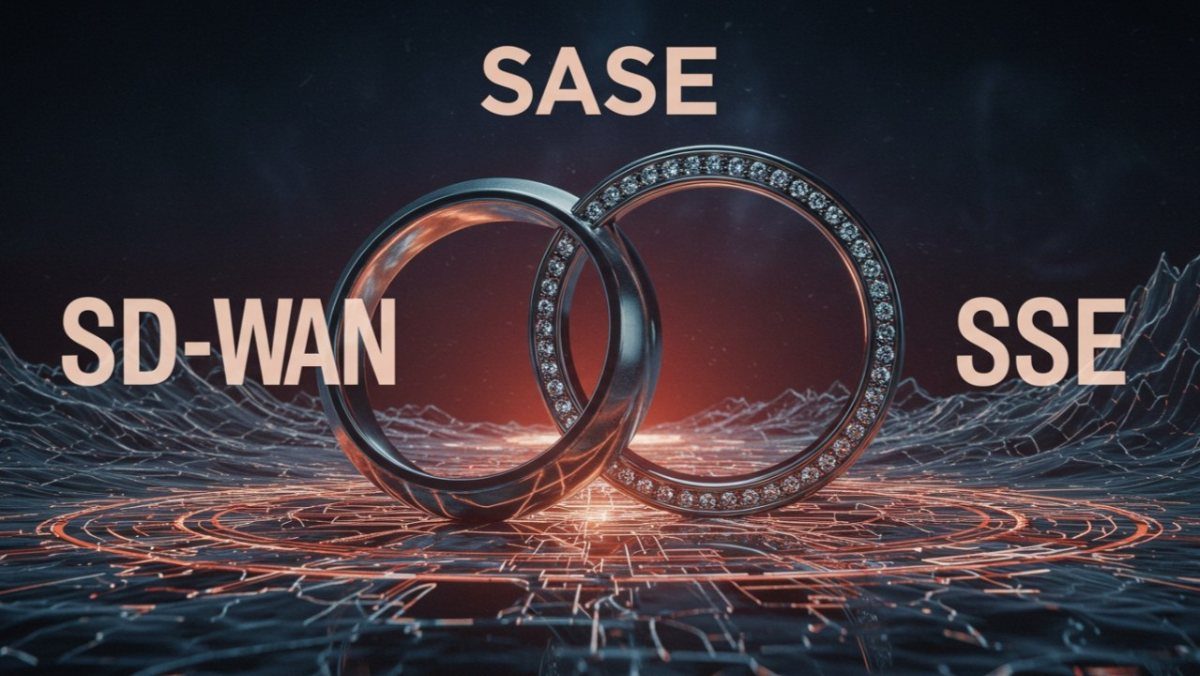
In 2019, Gartner introduced Secure Access Service Edge (SASE)—a cloud-native framework combining SD-WAN with comprehensive security functions. SASE ensures secure, seamless access to applications, regardless of location.
SSE: The Security-Focused Evolution
In 2021, Gartner introduced Security Service Edge (SSE) as the security-only subset of SASE. SSE includes security features without SD-WAN’s networking capabilities. The creation of SSE recognized that while few vendors offer full SASE solutions, many can deliver SSE.
Organizations, however, strongly prefer single-vendor SASE for simplified management and deployment.
SASE = SD-WAN + SSE
Market Trends: SASE, SD-WAN, and SSE
- The SASE market is projected to grow from $8.4 billion in 2023 to $17 billion by 2029, with a CAGR of 12.5%.
- The top six SASE vendors—Zscaler, Cisco, Palo Alto Networks, Broadcom, Fortinet, and Netskope—hold 72% market share.
- SSE represents 60% of the SASE market, with ZScaler as the clear leader.
- SD-WAN represents 40% of the SASE market, with Cisco as the clear leader.
- Single-vendor SASE solutions dominate, comprising over 80% of the market.
The Role of AI and Observability
AI is accelerating SASE adoption, helping organizations optimize distributed workloads securely. Enterprises are also leveraging AI-driven observability tools for enhanced security, performance monitoring, and policy enforcement as part of their SASE portfolio.
Conclusion
IT administrators must balance delivering seamless digital experiences, optimizing investments, and minimizing risks. Enterprise IT architecture has transformed from data center-centric environments to distributed ecosystems where administrators have limited control over user locations, applications, and infrastructure.
SASE—whether single-vendor or a combination of SD-WAN and SSE—provides the solution for this evolving landscape.
Originally published on LinkedIn

Mariano O'Kon speaks and advises on AI, cybersecurity, networking, infrastructure and the business impact of technology. Full bio